
BOTTOM LINE
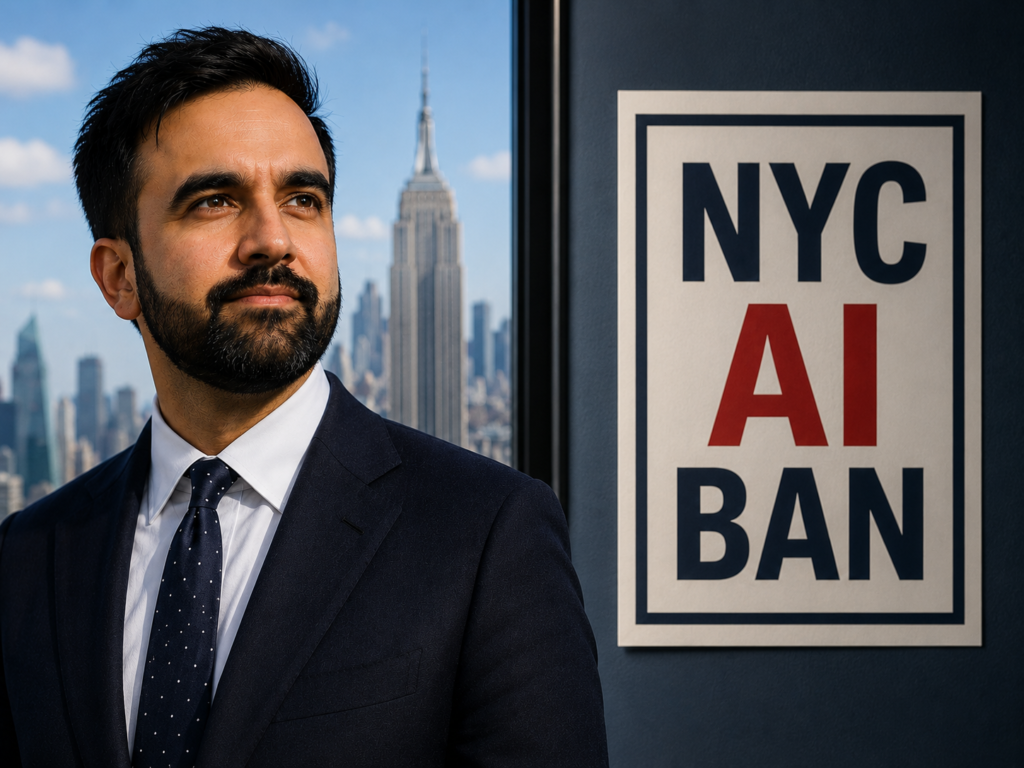
NYC’s yearlong ban on AI chatbots for 600,000 K-8 students is being cheered as a win for child safety, but the city’s own high school pilot already proves there’s a smarter path: chatbots built with guardrails that guide a student through the work instead of doing it for them.
New York City just told 600,000 kids they can’t use AI chatbots at school for a year, and plenty are celebrating it as a decisive win. That reaction says more about AI’s reputation than it does about the actual policy. The applause seems to be coming from people who’ve decided AI is inherently harmful, so any restriction, no matter how blunt or half thought out, reads as a victory. AI has a genuine PR problem, and many are ready to write the entire technology off out of fear rather than understand what it’s restricting and what it isn’t.
Mamdani’s instinct isn’t crazy. Caution with a new technology and a captive audience of kids is reasonable on its face. But the policy itself is more confusing than the celebration suggests, and the city’s own plan for high schoolers quietly proves there’s a better option than an outright ban.
What’s Actually Banned
The moratorium, covering the 2026-27 school year, targets student-facing generative AI and companion chatbots for grades K through 8. That’s the ChatGPT-style tool a kid types into directly. It is not a ban on AI in the building. Teachers can keep using AI for lesson planning and administrative work. Assistive tech for students with disabilities, tools for multilingual learners, and career-readiness programs are all exempted. Mamdani’s justification is that there’s no evidence AI-powered early education is necessary yet, which is true, but it’s also true that there’s no evidence it’s harmful either. The technology is a few years old. Absence of proof isn’t proof of harm, it’s just an argument for caution, and caution and prohibition aren’t the same policy.
The City Already Built the Alternative
High schoolers aren’t banned from AI, they’re getting a capped pilot of several vetted tools that are each based on different technology. Quill gives students automated feedback on their writing. Edia walks them through math problems step by step. Intel’s program is built around project-based learning. None of those are chatbots in the ChatGPT sense, they’re closer to structured coaching software than something a kid holds a conversation with.
Playlab is different, it’s a platform built specifically for creating custom AI chatbots with guardrails, a teacher or district defines exactly what the bot is allowed to do, and students interact with it conversationally inside those limits. New York City is already piloting the exact thing critics of classroom AI, myself included, should actually be asking for: a chatbot a student can talk to, engineered so it physically can’t write the essay or hand over the answer.
That’s the real alternative to an outright ban. Instead of walling students off from generative AI until 9th grade, the city could work with the companies building these models to create a version restricted at the source, one that can guide a kid through an assignment, answer questions, and act like a genuine conversational tutor, but is technically incapable of just writing the paper for them. Playlab proves that’s buildable today, not some future feature. The city just decided to only trust it with high schoolers.
Banning It Doesn’t Teach Kids to Use It
AI chatbots, used properly, are a genuinely useful learning tool, not a threat to be quarantined until high school. A kid who learns early how to ask a good question, evaluate a bad answer, and use AI as a thinking partner instead of an answer machine is building a skill that’s going to matter for the rest of their life. Delaying that until 9th grade doesn’t protect a student from the technology, it just delays when they start learning to use it well, at exactly the moment the tech is becoming as pervasive as a search engine already is.
None of this means AI should be handing out answers or writing papers for kids, and anyone arguing that isn’t paying attention to what actual learning requires. It also doesn’t mean AI needs to replace anything about the relationship between a student and a teacher, that’s a separate fight this policy doesn’t need to pick. A well-designed AI tool sits next to a teacher, not instead of one, the same way a calculator never replaced a math teacher, it just changed what the teacher spent class time on.
New York didn’t need a blanket ban to protect students. It needed the discipline to build the Playlab model district-wide instead of walling most of its students off from it. Calling a one-year moratorium a decisive stand for child safety is good messaging. It’s just not the same thing as good policy.