
BOTTOM LINE
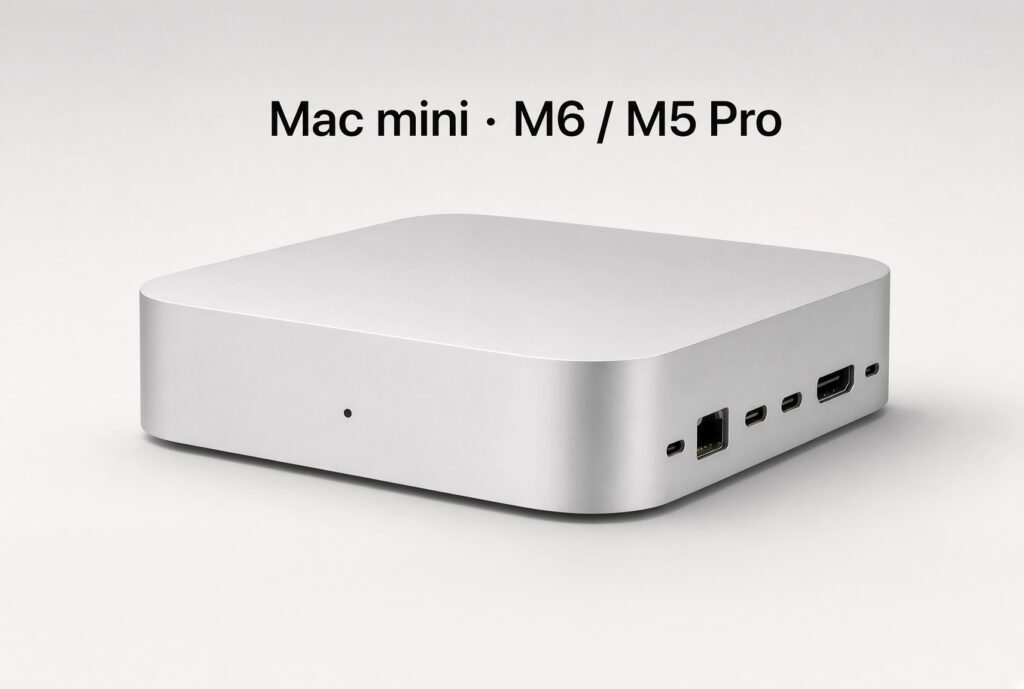
Apple’s new Mac mini now starts at $899, its second price increase in four months, as the AI-driven DRAM shortage spills into consumer hardware. The M6 chip is a genuine leap forward, but most buyers won’t have a workflow demanding enough to justify paying for it.
Apple’s new Mac mini starts at $899, the second price increase in four months and a clear sign of how the AI-driven DRAM shortage is spilling into consumer hardware. The new M6 chip is a genuine leap forward, but most buyers won’t have a workflow demanding enough to need it.
The Mac mini has always occupied a strange place in Apple’s lineup. It’s the machine people buy when they want serious performance without paying laptop money or desktop tower money. When the current compact form factor arrived in October 2024, the $599 starting price felt almost aggressive. It was one of the clearest value propositions Apple had offered in years.
That version of the product is gone.
The Climb From $599
The climb away from $599 didn’t happen in one jump. Apple quietly raised the starting price to $799 back in May 2026, discontinuing the base 256GB configuration as the same AI-driven memory shortage started squeezing supply. Now, with the new M6 chip, the base model starts at $899, and the M5 Pro configuration begins at $1,699. Both numbers are higher than even that intermediate price.
Apple isn’t alone in this. Memory prices have climbed hard as AI data centers absorbed enormous amounts of DRAM, and consumer devices are catching the spillover. The Mac mini is simply one of the more visible victims, because it went from $599 to $899 in under two years while looking almost identical on the outside.
The Performance Is Real
The new machine is meaningfully faster. Apple is claiming up to 4x better AI performance compared with the previous generation, along with faster storage and graphics. The M6 is Apple’s first 2-nanometer chip, and the higher configurations bring more cores, more memory bandwidth, and better support for local AI workloads. This is not a minor refresh. If you are running large language models locally, building agents, or doing heavy creative work that actually saturates older chips, the gains will be noticeable.
Built for an Always-On AI Workstation
Apple is clearly positioning the new Mac mini for people who treat the computer as an always-on AI workstation. Demand for local agents has already made previous Mac minis hard to find at times. The new hardware leans into that use case. That’s a real audience. It’s just not most of the audience. I am running an M2 Pro Mac mini, and it still performs all my tasks with ease. Web browsing, writing, video calls, light editing, multiple browser profiles, and the usual background tools never make it break a sweat. The machine is several years old and still overbuilt for the way I actually work.
With every Apple silicon launch, the performance curve has been so steep that a two- or three-year-old machine often remains more than enough. The new Mac mini is faster and more expensive. And for a large percentage of buyers, the practical difference in daily use will be small.
Headroom Most People Won’t Use
The people who should buy it are the ones who can point to a specific bottleneck the new chips remove. Everyone else is mostly buying headroom they may never use.
The Mac mini used to be the rare Apple product that felt almost underpriced relative to what it delivered. What remains is still excellent hardware, just priced more like the rest of the market after a memory shortage and a surge in AI-related demand.
Impressive machine. Higher floor. Narrower group of people who actually need the upgrade.