
BOTTOM LINE
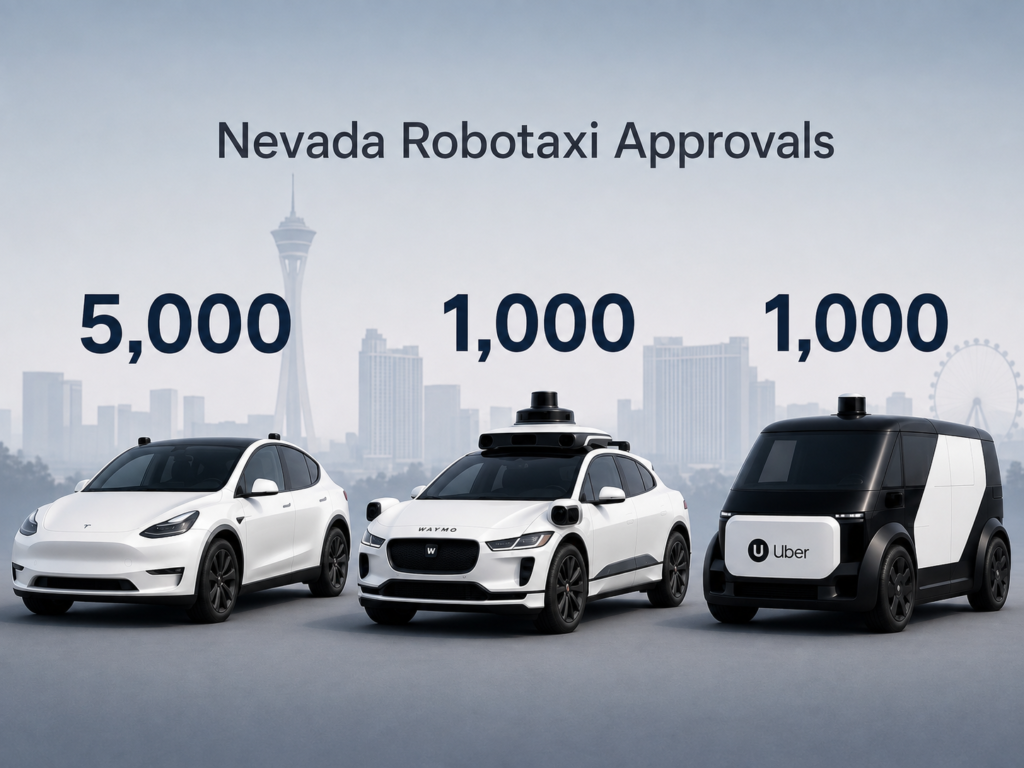
Nevada just replaced Tesla’s 10-vehicle interim robotaxi permit with a ceiling of 5,000, but that number is regulatory headroom, not a forecast. Tesla itself says a fleet near 2,500 would count as a win, while Waymo and Uber each picked up permits for 1,000 vehicles of their own.
In late July 2026, the Nevada Transportation Authority issued Tesla an interim Autonomous Vehicle Network Company permit limited to just 10 robotaxis, confined largely to a narrow Las Vegas Strip corridor with speed restrictions and no airport access. The modest authorization quickly became fodder for online criticism, with observers portraying it as evidence of limited regulatory confidence in Tesla’s unsupervised system.
A Full Commercial Permit
On August 20, that interim restriction was replaced. The Authority unanimously approved full commercial permits for Tesla, Waymo, and Uber’s Aviari subsidiary across Clark County. Tesla received authorization for up to 5,000 fully autonomous vehicles in the first 12 months. Waymo and Uber each received ceilings of 1,000. The numbers largely reflect what each company requested in its application. Tesla had sought the higher figure from the outset; Waymo applied for the more measured allocation.
A Ceiling, Not a Forecast
The 5,000 figure is a regulatory ceiling, not a deployment target. During the Authority meeting, Tesla Cybercab chief engineer Eric Early stated that 5,000 “has always been a ceiling” and that operational capacity, not technology, remains the binding constraint. He indicated the company would be “extremely happy and satisfied” to reach roughly 2,500 vehicles, or slightly higher, within the year. Initial service is expected to rely on Model Y vehicles, with purpose-built Cybercabs to follow later.
This gap between authorized maximum and realistic near-term volume is the central point. Tesla’s national unsupervised robotaxi fleet remains modest compared with Waymo’s established multi-city operations. Achieving even 2,500 vehicles in Clark County within 12 months would require substantial progress in production, validation, fleet management, remote assistance infrastructure, and customer operations. The higher permit simply removes one regulatory bottleneck and provides headroom if those operational elements advance faster than expected.
Nevada’s Competitive Bet
The concurrent approvals also illustrate Nevada’s relatively enabling approach under its Autonomous Vehicle Network Company framework. By clearing three operators, plus the existing Zoox permit, for paid service in a high-visibility market, the state has created a competitive proving ground while retaining conditions on inspections, insurance, rate filings, accessibility, reporting, and operational design domains. Airport service remains contingent on separate approval from the Clark County Department of Aviation. Geofencing and any residual operational limits will shape early utilization and economics; high-demand corridors around the Strip, resorts, and downtown are the natural starting points.
The episode underscores a recurring pattern in autonomous vehicle progress. Regulatory milestones generate headlines and, in this case, a sharp shift in perception from the 10-vehicle interim order to the 5,000-vehicle ceiling. Actual commercial scale, however, depends on the slower work of manufacturing, safety validation, and day-to-day operations. Tesla now holds a larger authorized envelope than its competitors in Clark County. Whether that translates into a meaningful fleet advantage in 2027 will be determined less by the permit and more by execution on the ground.